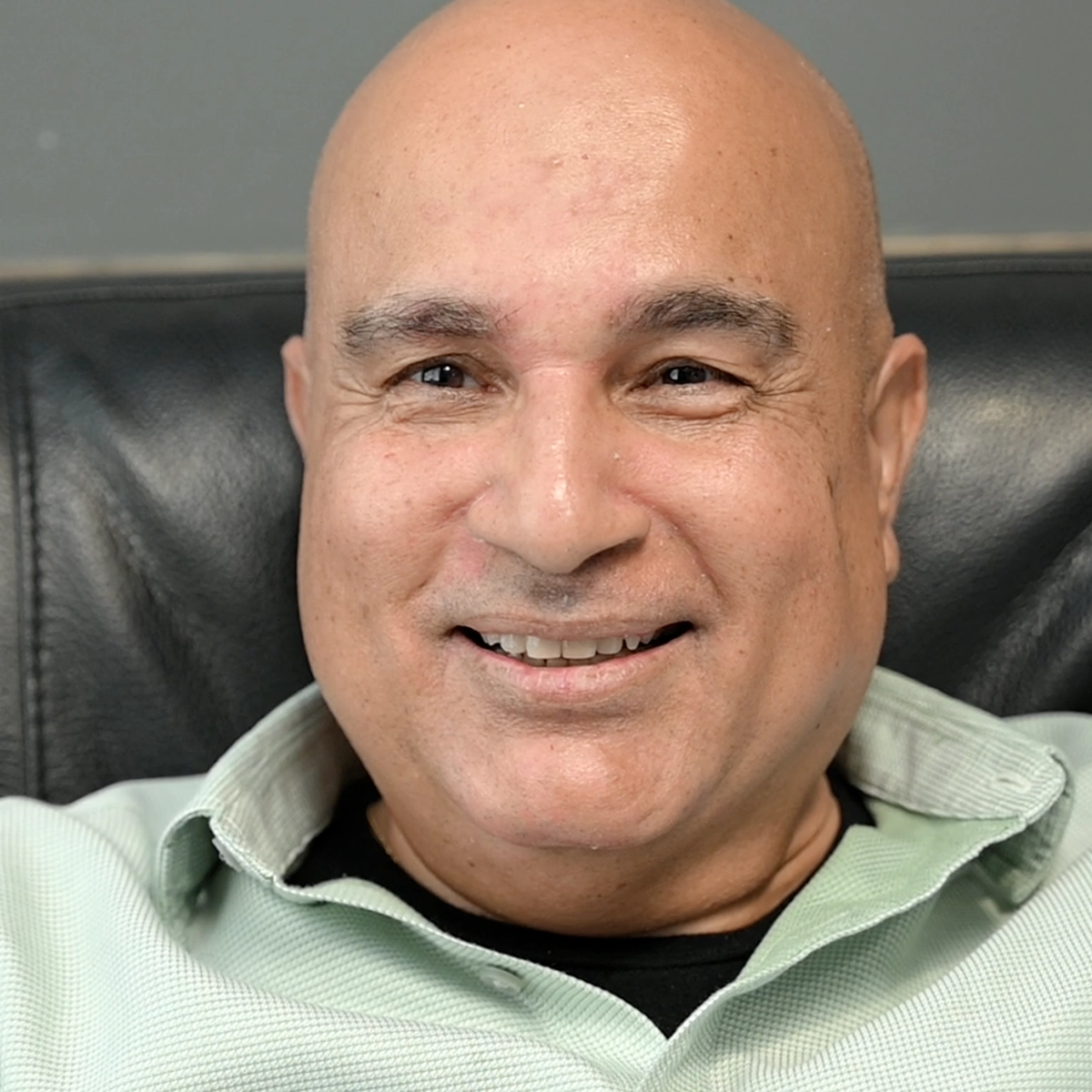
Saroj’s Story: Using Data to Take Control of His Health
For Saroj, the wake-up call came from data.
Before coming to Next Health, he knew certain markers were not where they should be. His blood sugar was too high, his cholesterol levels were unhealthy, and his inflammation markers placed him in a higher-risk category for heart disease. These were not symptoms he could necessarily feel every day, but they were signs that something deeper was happening inside his body.
“These are the kinds of things that slowly build up and you don’t feel them day to day,” Saroj shared. “But they’re doing damage at the cellular level.”
Then came the biological age testing. The results showed that some of Saroj’s organs, including his lungs, liver, and metabolic system, were aging significantly faster than his actual age. That information changed the way he looked at his health.
“That was the real wake-up call,” he said.
In conventional medicine, Saroj felt the approach had always been reactive. Annual physicals and standard bloodwork would lead to familiar advice: watch your diet, monitor your sugar, or consider medication if things got worse. But to Saroj, that did not go far enough. He wanted to know why these issues were developing and what he could do to change the trajectory before a more serious problem occurred.
“I wanted a more proactive approach,” he said.
At Next Health, Saroj found that approach. Dr. Habib and his team performed advanced testing that went far beyond a typical checkup, including DNA methylation testing to evaluate biological age by organ system. For Saroj, who comes from an engineering background and works with data and systems every day, this made sense. It gave him a clear, measurable picture of what was happening inside his body.
“What Dr. Habib and the Next Health team do is exactly that,” Saroj said. “They use data to understand what’s going on in your body system by system.”
With those insights, Dr. Habib developed a customized treatment plan for Saroj. His plan included IV therapy to help replenish nutrients at the cellular level, hyperbaric oxygen therapy to support oxygen delivery to tissues, and a detox protocol designed around his specific needs.
The experience felt completely different from any doctor’s office Saroj had visited before. Instead of a rushed appointment or a one-size-fits-all recommendation, he felt heard, educated, and supported.
“They spend real time with you,” Saroj said. “Dr. Habib and his team are very thorough.”
What stood out most was Dr. Habib’s ability to explain complex data in a way that was understandable and actionable. He walked Saroj through his biological age results organ by organ, helping him understand what each result meant and how the plan would address his health at a deeper level.
“Dr. Habib is not your typical doctor,” Saroj said. “He doesn’t just look at your symptoms, he looks at the whole picture.”
Saroj describes Dr. Habib’s philosophy as “predict, prevent, and prolong”, identifying potential problems early, preventing them from worsening, and helping patients extend their healthy years. That philosophy gave Saroj a new sense of direction.
Today, Saroj feels more energized and more in control of his health. The IV therapy gives him a noticeable boost, and the hyperbaric sessions have supported how he feels physically. Just as importantly, he now has a deeper understanding of what is happening inside his body and clear data showing where to focus.
“Before, I was just going through the motions,” he said. “Now I understand what’s happening inside my body at a deeper level.”
For Saroj, Next Health has transformed health from something reactive into something strategic, measurable, and empowering. He is more conscious of what he eats, more intentional about how he cares for himself, and more proactive about his future.
His advice to others is simple: do not wait.
“If you feel like your regular doctor is just checking boxes and putting you on medications without really digging deeper, I would strongly recommend looking into what Next Health offers,” Saroj said. “Be proactive.”